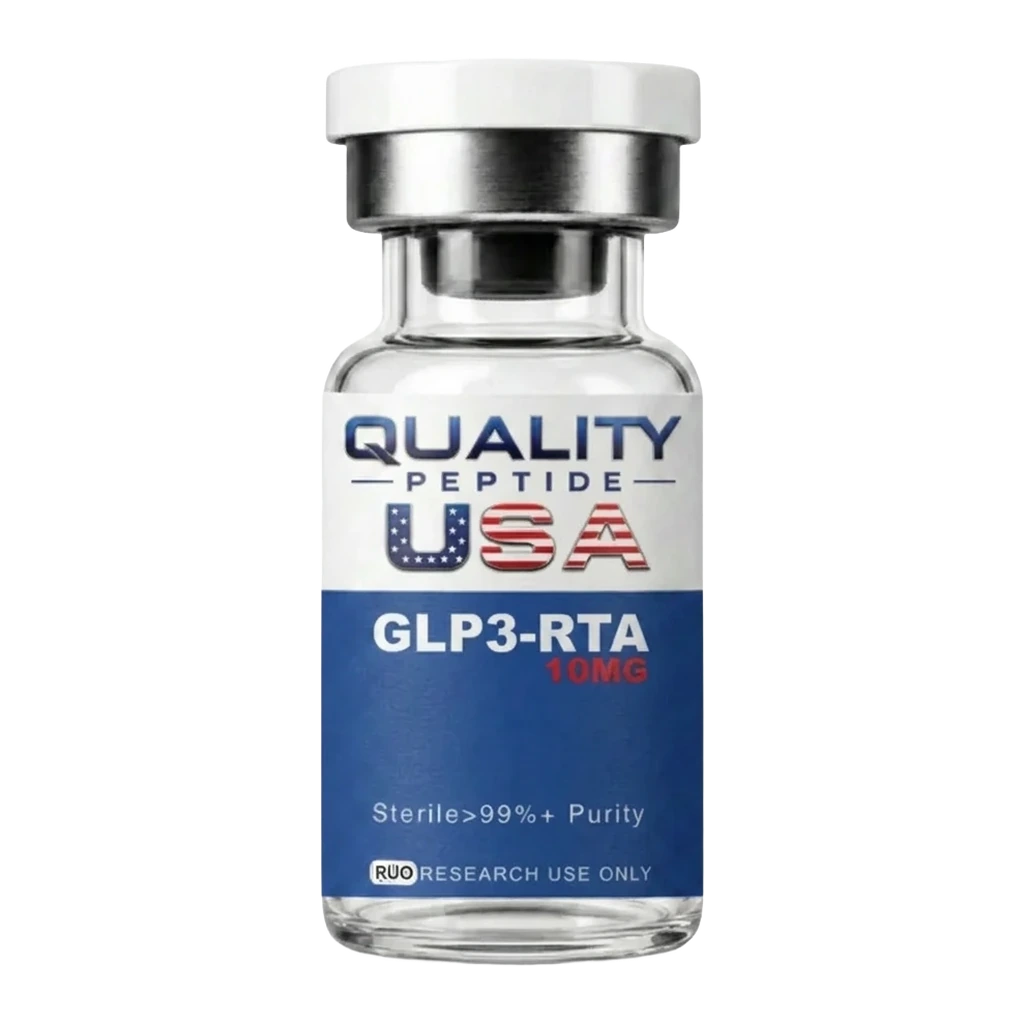
Metabolic Peptide
Retatrutide
Triple-agonist research peptide investigated across GLP-1, GIP, and glucagon pathways.
$105.00
Free shipping on orders over $300 · Same-day dispatch before 2PM EST
Select Option
Volume Discounts
Don't forget your reconstitution solution
Bacteriostatic Water 30mL
$14.99
Purchase Options
Lab Verified
HPLC-MS + endotoxin
Same-Day Ship
Orders by 2PM EST
Damage Coverage
Free replacement
Discreet Packaging
Plain outer box
Research Use Only
Not for human or veterinary consumption. For laboratory and in-vitro research purposes only.
Description
Retatrutide is a synthetic peptide under active study for its triple-receptor agonism at the GLP-1, GIP, and glucagon receptors.
Supplied as a sterile lyophilized powder, intended exclusively for in-vitro research and laboratory use.
Each batch is independently verified by HPLC-MS and screened for endotoxins before release.
Reconstitution
Reconstitute with bacteriostatic water in your preferred ratio. Store reconstituted vials refrigerated (2–8 °C) and use within recommended timeframes for your protocol.
Storage
Unreconstituted lyophilized powder stable at room temperature for short periods; refrigerate (2–8 °C) for long-term storage. Avoid repeat freeze/thaw cycles.
- Dose
- 10mg
- Purity
- ≥ 99%
- Form
- Lyophilized powder
- Storage
- Refrigerate after reconstitution
- Origin
- USA — synthesized & shipped domestically
- Testing
- HPLC-MS, MALDI, endotoxin screen
Research Overview
Retatrutide is an investigational synthetic peptide engineered as a single-molecule triple agonist of the GLP-1, GIP, and glucagon receptors. Its design unites the metabolic signaling profiles of three native incretin and counter-regulatory hormones into one sequence, making it one of the most-studied multi-receptor research peptides in current metabolic literature.
In laboratory models, retatrutide has been used to probe how simultaneous stimulation of these three pathways influences energy expenditure, hepatic lipid handling, glycemic response, and adipose tissue remodeling. Researchers commonly use it as a comparator against dual-agonist peptides such as tirzepatide.
Mechanism of Action
Retatrutide binds and activates the GLP-1, GIP, and glucagon receptors with carefully balanced potencies. GLP-1 and GIP activation drive insulinotropic signaling in pancreatic beta cells, while glucagon-receptor activation is implicated in increased basal metabolic rate and hepatic lipid turnover in research models.
Research Applications
- Multi-receptor incretin signaling research
- Comparative pharmacology vs. dual GIP/GLP-1 agonists
- Adipose remodeling and lipolysis studies
- Hepatic lipid handling research models
Study Highlights
Triple-pathway activation
Retatrutide's distinguishing feature in published research is the deliberate balance of agonism across GLP-1, GIP, and glucagon receptors, allowing investigators to dissect contributions of each pathway in vitro.
Extended exposure profile
Fatty acid conjugation supports albumin binding, giving the peptide an exposure profile suitable for once-weekly research dosing schedules in preclinical models.
Reconstitution & Handling
Certificate of Analysis
Lot / Batch
QP-2025-1163
- Product
- Retatrutide
- Manufacture date
- 2025-08-12
- Test date
- 2025-08-15
- Expiration
- 2028-08-12
- Appearance
- White to off-white lyophilized powder
- Identity
- Confirmed — matches reference standard
- Purity (HPLC)
- 99.50%
- Water content (KF)
- 1.50%
- Endotoxin (LAL)
- < 0.08 EU/mg
- Bioburden
- < 1 CFU / vial
- Analytical methods
- RP-HPLC, ESI-MS, MALDI-TOF, LAL endotoxin assay
- Released by
- QPUSA Quality Assurance Lab