Tissue Repair Peptide
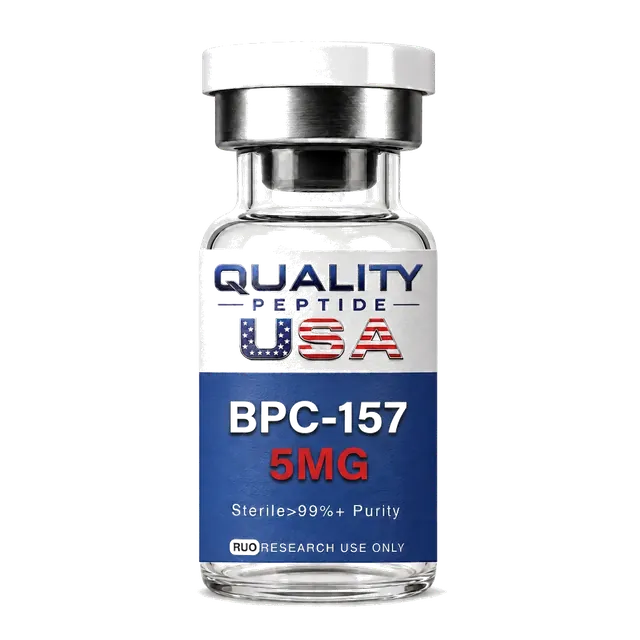
BPC-157
Stable gastric pentadecapeptide studied in soft-tissue research.
$60.00
Free shipping on orders over $300 · Same-day dispatch before 2PM EST
Select Option
Volume Discounts
Don't forget your reconstitution solution
Bacteriostatic Water 30mL
$14.99
Purchase Options
Lab Verified
HPLC-MS + endotoxin
Same-Day Ship
Orders by 2PM EST
Damage Coverage
Free replacement
Discreet Packaging
Plain outer box
Research Use Only
Not for human or veterinary consumption. For laboratory and in-vitro research purposes only.
Description
BPC-157 is a synthetic pentadecapeptide derived from a protective protein found in gastric juice.
Reconstitution
Reconstitute with bacteriostatic water in your preferred ratio. Store reconstituted vials refrigerated (2–8 °C) and use within recommended timeframes for your protocol.
Storage
Unreconstituted lyophilized powder stable at room temperature for short periods; refrigerate (2–8 °C) for long-term storage. Avoid repeat freeze/thaw cycles.
- Dose
- 5mg
- Purity
- ≥ 99%
- Form
- Lyophilized powder
- Storage
- Refrigerate after reconstitution
- Origin
- USA — synthesized & shipped domestically
- Testing
- HPLC-MS, MALDI, endotoxin screen
Research Overview
BPC-157 (Body Protection Compound 157) is a stable synthetic pentadecapeptide originally derived from a protective protein identified in gastric juice. It is one of the most heavily studied research peptides in the soft-tissue and gastrointestinal literature.
In laboratory and animal models, BPC-157 has been examined for its influence on angiogenesis, fibroblast migration, tendon-to-bone interface healing, and gut barrier dynamics. It is supplied as a sterile lyophilized powder for in-vitro research.
Mechanism of Action
Research models suggest BPC-157 modulates the nitric oxide (NO) system, upregulates VEGFR2 expression, and promotes fibroblast migration — collectively supporting angiogenic and reparative pathways in soft tissues.
Research Applications
- Tendon and ligament fibroblast research
- Angiogenesis studies (VEGFR2 pathway)
- Gastrointestinal mucosa research
- Nitric oxide pathway investigations
Study Highlights
Angiogenic signaling
BPC-157 has been used in research to study upregulation of VEGFR2 and downstream nitric oxide release, both of which support new vessel formation in soft-tissue repair models.
Tendon fibroblast migration
In-vitro studies have characterized accelerated tendon fibroblast outgrowth and improved cell survival following BPC-157 exposure.
Reconstitution & Handling
Certificate of Analysis
Lot / Batch
QP-2025-6395
- Product
- BPC-157
- Manufacture date
- 2025-08-20
- Test date
- 2025-08-23
- Expiration
- 2028-08-20
- Appearance
- White to off-white lyophilized powder
- Identity
- Confirmed — matches reference standard
- Purity (HPLC)
- 99.50%
- Water content (KF)
- 1.50%
- Endotoxin (LAL)
- < 0.05 EU/mg
- Bioburden
- < 1 CFU / vial
- Analytical methods
- RP-HPLC, ESI-MS, MALDI-TOF, LAL endotoxin assay
- Released by
- QPUSA Quality Assurance Lab